



Control Joint Systems iChem

iChem Control Joint Systems: The Complete Solution to Prevent Cracks in Concrete Floors & Slabs
Introduction
Control joints are essential components in any concrete slab or flooring system. They help control shrinkage cracks, manage thermal expansion and contraction, and ensure that any structural movement happens within a predefined joint—not in the middle of your concrete surface.
In the previous article, we explained what control joints are, why they matter, and how they work.
In this new guide, we focus on the next crucial step:
The advanced Control Joint Systems by iChem — engineered to protect floors, slabs, roofs, and building structures from cracking and thermal stress.
These systems are designed to meet Egyptian standards and international codes, offering long-lasting performance for industrial, commercial, and residential applications.
Why Control Joints Matter (and Why iChem Systems Lead the Market)
Installing iChem control joint systems ensures:
Precise crack control
Absorption of thermal and structural stresses
Smooth and natural movement between concrete slabs
Longer lifespan of floors and finishes
Protection against early failure in tiles, coatings, or concrete top layers
iChem systems are engineered for concrete slabs, slab-on-grade floors, industrial floors, roofs, façades, walls, and heavy-duty projects.
iChem Control Joint Systems (Full Product Guide)
Below is your complete guide to all iChem Control Joint Systems — functions, applications, and advantages.
iChem i340: Structural Control Joint for Roofs & Exposed Concrete Surfaces
Technical Description
The iChem i340 system is a structural control joint designed to prevent unpredictable cracking caused by expansion and contraction.
It is installed in concrete roofs and slab-on-grade surfaces to ensure controlled movement and structural stability.
Key Features
Reduces unexpected surface cracking
Allows calculated expansion/contraction movement
Maintains clean and aesthetic joints
Suitable for areas exposed to temperature changes
Manufactured from high-quality, corrosion-resistant materials
Technical Specifications
Colors: Project-specific
Joint width: Designed per structural drawings
Frame height: Matches standard concrete thickness
iChem i345: Aluminum Movement Joint for Floors & Tiles
Technical Description
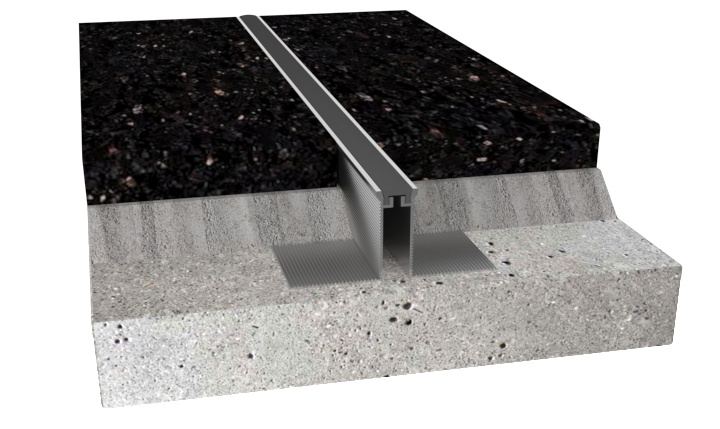
The iChem i345 system is an aluminum movement joint designed to accommodate expansion between concrete floor slabs.
It provides excellent durability, smooth movement, and an aesthetically clean finish.
Key Features
Allows controlled horizontal and vertical movement
Ideal for industrial and commercial floors
High-strength aluminum profile
Suitable for concrete slabs, ceramic tiles, marble, and stone flooring
Best Applications
Shopping malls
Hospitals
Airports
Hotels
Warehouses & industrial floors
High-traffic commercial areas
iChem i348: PVC Finishing Control Joint for Internal Floors
Technical Description
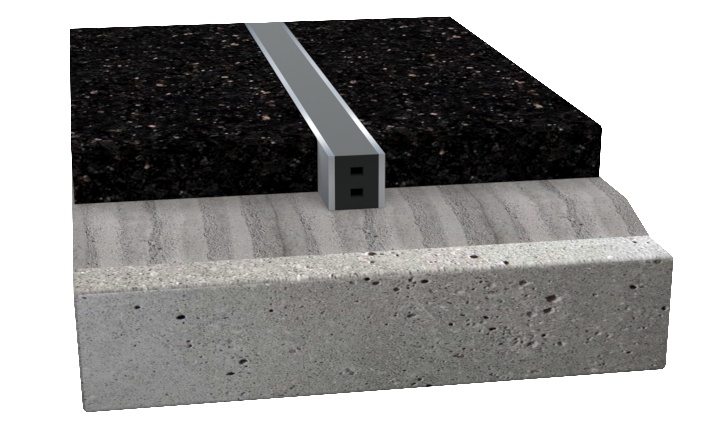
The iChem i348 PVC Joint is a flexible, chemical-resistant finishing joint designed to prevent cracks within floor finishing layers.
It is especially suitable for interior flooring where small thermal movements can cause finish failures.
Key Features
High flexibility
Moisture and chemical resistance
Ideal for light-to-medium load floors
Quick and easy installation
Perfect for indoor finishing layers
Why Choose iChem Control Joint Systems?
Competitive Advantages
Compliant with the Egyptian Code, EN standards, and ASTM
Manufactured with high-grade materials
Long service life & excellent weather resistance
Simple installation & low maintenance
Trusted by engineers, contractors, and consultants across Egypt
Technical support available for all project sizes
Quick Comparison: Control Joint vs. Expansion Joint
Feature | Control Joint | Expansion Joint |
|---|---|---|
Purpose | Controls shrinkage cracks | Allows large structural movement |
Size | Narrow joint | Wider, includes rubber or metal inserts |
Locations | Floors, slabs, finishes | Buildings, bridges, large structures |
Execution | During or after casting | During design and construction |
When Should You Install Control Joints?
After concrete placement (Saw-Cut Joints)
During casting (Preformed Joints)
Every 3–5 meters according to the Egyptian code
In areas exposed to temperature changes or high loads
How to Install Control Joints (Step-by-Step Guide)
Determine spacing based on code and slab thickness
Mark the joint layout before concrete placement
Install the suitable iChem system (i340 / i345 / i348)
Ensure straight alignment
Apply finishing and cleaning
Verify joint flexibility and movement clearance
Control joints are intentional cuts or profiles that control where cracks will form due to shrinkage or thermal movement.
Control joints manage small shrinkage cracks; expansion joints absorb large building movements.
Saw-cut joints: sometimes require sealant
Preformed systems (i340 / i345 / i348): usually do NOT need sealant
iChem i345 — heavy-duty aluminum joint designed for high-traffic floors.
iChem i348 — flexible PVC joint suitable for delicate indoor finishes.
iChem i340 — engineered to handle temperature variations and prevent unpredictable cracking.
Cost depends on:
Joint type
Width & height
Quantity
Application (floors, roofs, tiles)
For exact pricing:
📞 01022000050
Need help choosing the right control joint system?
With iChem Control Joint Systems, you guarantee long-lasting protection, crack control, and superior concrete performance.
📞 Call Now: 01022000050
Our engineers will help you choose the perfect system for your project.
share this post
Related posts you might like


Our latest posts


Frequently Asked Questions
Explore additional details and clarifications!
iChem i345 — heavy-duty aluminum joint designed for high-traffic floors.
Saw-cut joints: sometimes require sealant
Preformed systems (i340 / i345 / i348): usually do NOT need sealant
They are executed during the following stages:
During casting (Preformed)
Immediately after casting using saw cutting (Saw-Cut)
This is typically done at intervals of 3–5 meters, in accordance with the Egyptian Code.
Control joints manage small shrinkage cracks; expansion joints absorb large building movements.
Control joints are intentional cuts or profiles that control where cracks will form due to shrinkage or thermal movement.
Have any questions, suggestions or complaints?
Message us on whatsapp.